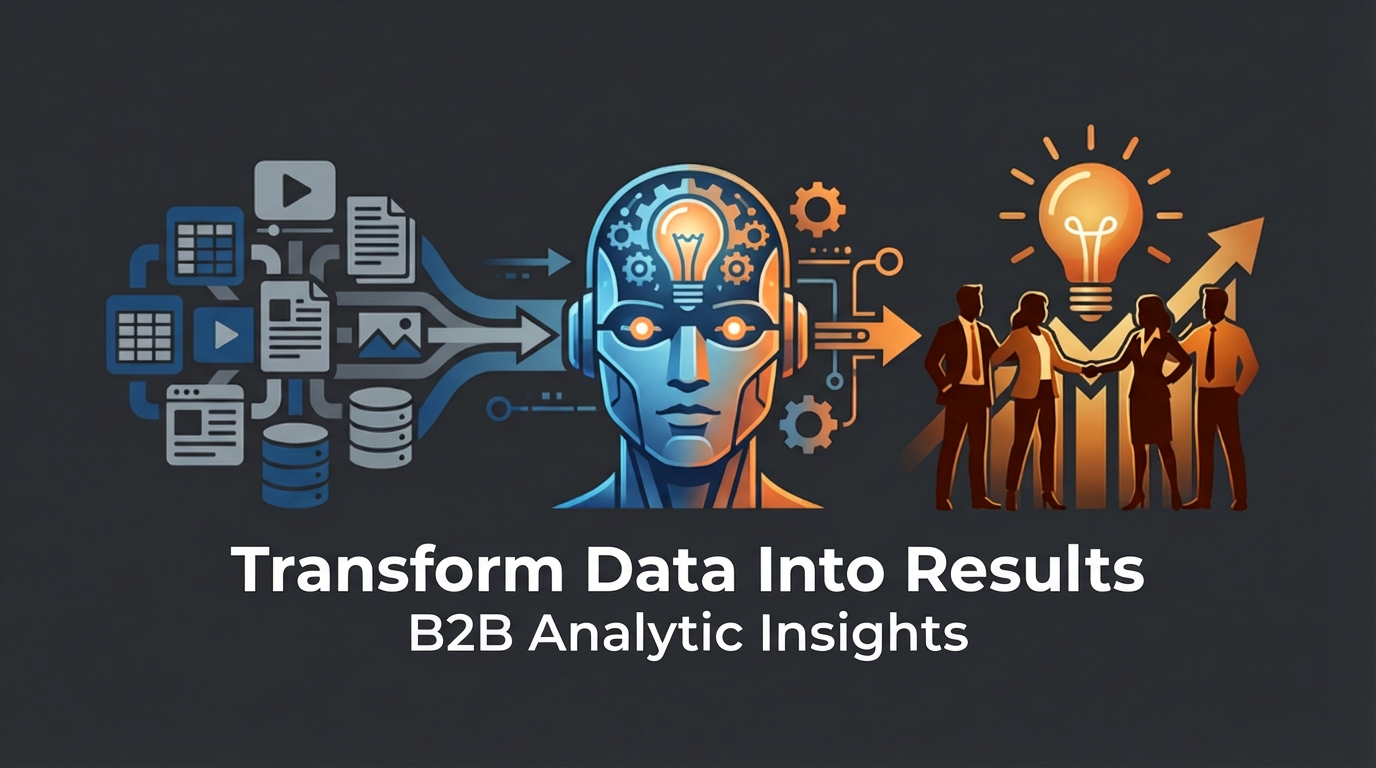

We face a constant challenge. Granting credit means facing uncertainty. The question isn’t if things can go wrong. It’s when and how. Our job is to minimize that risk. We need to see beyond the surface. We need to understand collectibility before the ink dries.
This isn’t about luck. It’s about insight. It’s about rigorous analysis. Thousands of commercial entities depend on our judgment. Our decisions shape their futures. They also shape ours. The data we use is a tool. It’s a guide, not a master.
Collectibility is more than just a score. It’s a dynamic state. It reflects a business’s financial health. It also reflects its operating environment. The market shifts. Industries evolve. A seemingly strong business today could be vulnerable tomorrow. We need to anticipate these shifts.
Descriptive Analytics: The Foundation of Knowledge
We start with what happened. Descriptive analytics paint a picture. They show us the current state of play. What are the key financial metrics? What are the historical payment patterns? This information forms our baseline. It tells us where a business stands right now.
Financial Statements: More Than Pages of Numbers
Balance sheets, income statements, cash flow statements. These are not just compliance documents. They are rich sources of information. We look for trends. We look for anomalies. Declining revenues, increasing costs, shrinking margins. These are warning signs. They demand investigation.
- Revenue Recognition: How is revenue earned? Is it consistent? Is it tied to predictable cycles? Long sales cycles can create cash flow volatility. We need to understand this.
- Debt-to-Equity Ratio: This tells us how much debt a company carries relative to its equity. A high ratio suggests higher financial risk. Can the business service that debt?
- Liquidity Ratios: Current ratio, quick ratio. These measure a company’s ability to meet its short-term obligations. A decline here is a clear indicator of potential trouble.
Payment History: The Ultimate Test
Past behavior is often a predictor of future behavior. A consistent, on-time payment history is gold. Any deviations require scrutiny. Were these isolated incidents? Or part of a pattern?
- Days Sales Outstanding (DSO): How long does it take to collect revenue from customers? An increasing DSO signals collection issues. This directly impacts cash flow.
- Aging of Receivables: Where are the outstanding payments? Are they recent? Or are they significantly past due? Understanding the age of debt is critical.
Diagnostic Analytics: Digging for the “Why”
Descriptive analytics show us what happened. Diagnostic analytics help us understand why. This is where we move from observation to investigation. We look for the root causes of issues. This is essential for accurate risk assessment.
External Factors: The Unseen Forces
No business operates in a vacuum. External forces play a massive role. The overall economic climate is crucial. Industry-specific challenges matter. Even geopolitical events can have an impact.
- Economic Indicators: Inflation rates, interest rate hikes, unemployment figures. These affect consumer spending and business investment. When the economy falters, so do many businesses’ abilities to pay.
- Industry Trends: Is the industry growing? Is it contracting? Are there new regulations? Technological shifts can also render existing business models obsolete. We must stay informed.
Internal Operational Issues: Hidden Weaknesses
Sometimes, the problems are within the business itself. Inefficient operations can cripple even a strong company. Poor management can lead to bad decisions.
- Management Turnover: Frequent changes in leadership can signal instability. It can indicate internal conflicts or strategic misdirection.
- Operational Inefficiencies: Delays in production, supply chain disruptions, poor quality control. These increase costs and reduce competitiveness.
Supply Chain Intelligence: The Ripple Effect
A business’s health is intrinsically linked to its supply chain. Disruptions here cascade. They affect production, delivery, and ultimately, payment capabilities. We need to see the entire chain.
Mapping the Dependencies
Understanding a business’s suppliers and customers is vital. Who are their critical suppliers? What happens if one falters? Who are their most important customers? What is their financial health?
Supplier Risk Assessment
If a key supplier goes bankrupt, it can halt operations. We must assess the concentration of suppliers. Are there alternatives? How robust is the supplier’s own supply chain? This is not just about their solvency, but their resilience.
- Single Sourcing: Reliance on a single supplier for a critical component is a significant risk. Diversification is key.
- Supplier Financial Health: A quick check on key suppliers’ creditworthiness can prevent downstream problems.
Customer Concentration
A business heavily reliant on a few large customers is vulnerable. If one of those customers faces financial distress, it can severely impact the supplier’s revenue.
- Customer Diversification: A broad customer base mitigates this risk. We need to understand their customer relationships.
- Customer Payment Behavior: Are the key customers themselves reliable payers? This is a critical data point.
Decision Intelligence: Guiding the Credit Call
We have the data. We have the insights. Now, we need to make a decision. Decision intelligence brings structure to this process. It combines data, analytics, and human judgment. It ensures our decisions are rational and robust. Our experience informs this process. Thousands of our decisions confirm its value.
Predictive Analytics: Forecasting the Future
This is where we move from understanding the past to predicting the future. Predictive analytics use historical data and statistical models to forecast future outcomes. This is crucial for assessing future collectibility.
Credit Scoring Models: Beyond the Basics
Standard credit scores are a starting point. But for commercial entities, we need more. We need models that account for industry-specific factors. We need models that can adapt to changing market conditions.
- Probability of Default (PD): What is the likelihood this business will default on its obligations? Predictive models can assign a numerical probability.
- Loss Given Default (LGD): If a default occurs, what is the expected loss? This considers the recovery rate.
Early Warning Systems
We can build systems that flag businesses showing early signs of distress. These are not about predicting a specific default date. They are about identifying elevated risk. This allows for proactive intervention.
- Financial Trend Monitoring: Automated alerts when key financial ratios cross predefined thresholds.
- News and Sentiment Analysis: Monitoring news feeds and industry publications for signals of trouble.
Prescriptive Analytics: Charting the Course
Prescriptive analytics go beyond prediction. They recommend specific actions. They tell us what to do to achieve a desired outcome. In credit, this means recommending the optimal credit terms. It can also suggest ways to mitigate identified risks.
Risk Mitigation Strategies
If a business shows elevated risk, what can we do? Prescriptive analytics can help explore options.
- Collateral Requirements: Can we secure the credit with specific assets? This reduces our exposure.
- Shorter Payment Terms: Reducing the payment window can minimize the time exposed to risk.
- Credit Insurance: Transferring some of the risk to a third party.
Optimal Credit Limits
Based on all the data and analysis, what is the right amount of credit to extend? This is the ultimate prescriptive output. It balances opportunity with risk.
- Dynamic Credit Limit Adjustments: Setting limits that can automatically adjust based on ongoing performance monitoring.
AI-Driven Analytics: Enhancing Our Capabilities
Artificial intelligence and machine learning are powerful enablers. They don’t replace human judgment. They augment it. They allow us to process vast amounts of data. They uncover patterns humans might miss.
Uncovering Hidden Correlations
AI can identify complex relationships between variables. These correlations might not be obvious through traditional analysis. They can reveal new insights into what drives collectibility.
Natural Language Processing (NLP)
NLP can analyze unstructured data. This includes news articles, social media posts, and even call transcripts. This can provide early signals of distress or positive developments.
- Sentiment Analysis: Gauging the overall sentiment towards a company or its industry.
- Topic Modeling: Identifying emerging issues or trends discussed in relevant text.
Unsupervised Learning
This type of AI can find patterns in data without being told what to look for. It can identify clusters of businesses with similar risk profiles. It can also detect anomalies that warrant further investigation.
- Anomaly Detection: Identifying outlier companies that behave differently from their peers, potentially signaling unique risks or opportunities.
- Cluster Analysis: Grouping businesses based on multifaceted characteristics to understand diverse risk segments.
Automating Routine Tasks
AI can automate many of the repetitive, time-consuming tasks involved in credit analysis. This frees up our skilled professionals. They can then focus on higher-value activities like strategic decision-making and relationship management.
- Data Extraction and Cleaning: Automating the process of gathering and preparing data from various sources.
- Initial Risk Scoring: Using AI to provide preliminary risk scores for large volumes of applications.
The Human Element: Judgment and Collaboration
| Debt Type | Collectibility |
|---|---|
| Credit Card Debt | High |
| Medical Debt | Medium |
| Student Loan Debt | Low |
| Utility Bills | High |
Data is essential. Analytics are powerful. But they are not the whole story. Our experience matters. Our judgment is critical. The tension between leading with insight and collaborating with our teams is real. It’s also essential.
Leading with Insight, Grounded in Data
We must lead the charge. We must set the direction. This means demonstrating how data and analytics can transform our decision-making. It means championing new approaches. But we do this from a place of understanding. We understand the practical realities of credit and collections.
- Translating Data into Action: Our role is to ensure the insights derived from data lead to concrete actions.
- Setting a Clear Vision: Articulating how advanced analytics will improve our collectibility outcomes.
Collaborating for Better Outcomes
We don’t operate in isolation. Our colleagues in sales, operations, and collections have invaluable perspectives. They see things we don’t. Their input is vital. We must foster an environment where their experience is respected. We must integrate their feedback into our analytical frameworks.
Bridging the Gap
There’s often a gap between the data analyst and the front-line credit professional. We build bridges. We ensure the analytics are understandable. They are relevant to the decisions being made.
- Interactive Dashboards: Presenting complex data in intuitive visual formats.
- Feedback Loops: Creating channels for credit officers to share their experiences and flag data anomalies.
Iterative Improvement
Collectibility is not static. Our understanding of it evolves. The market changes. Our models must adapt. This requires continuous learning and refinement. We review our decisions. We analyze our successes and failures. We adjust our frameworks accordingly. This iterative process is key to sustained improvement.
- Performance Monitoring: Regularly assessing the accuracy of our predictions and the effectiveness of our strategies.
- Model Refinement: Updating our analytical models with new data and insights.
The data behind the debt is already there. It’s in financial statements. It’s in payment histories. It’s in industry trends. Our job is to access it. To analyze it. To understand it. Then, to act on it. This ensures we are not just assessing risk. We are actively shaping collectibility. We are making informed calls. Calls grounded in reality. Calls that drive results. We are transforming data into predictable outcomes. This is the heart of smart credit. This is how we build lasting success.