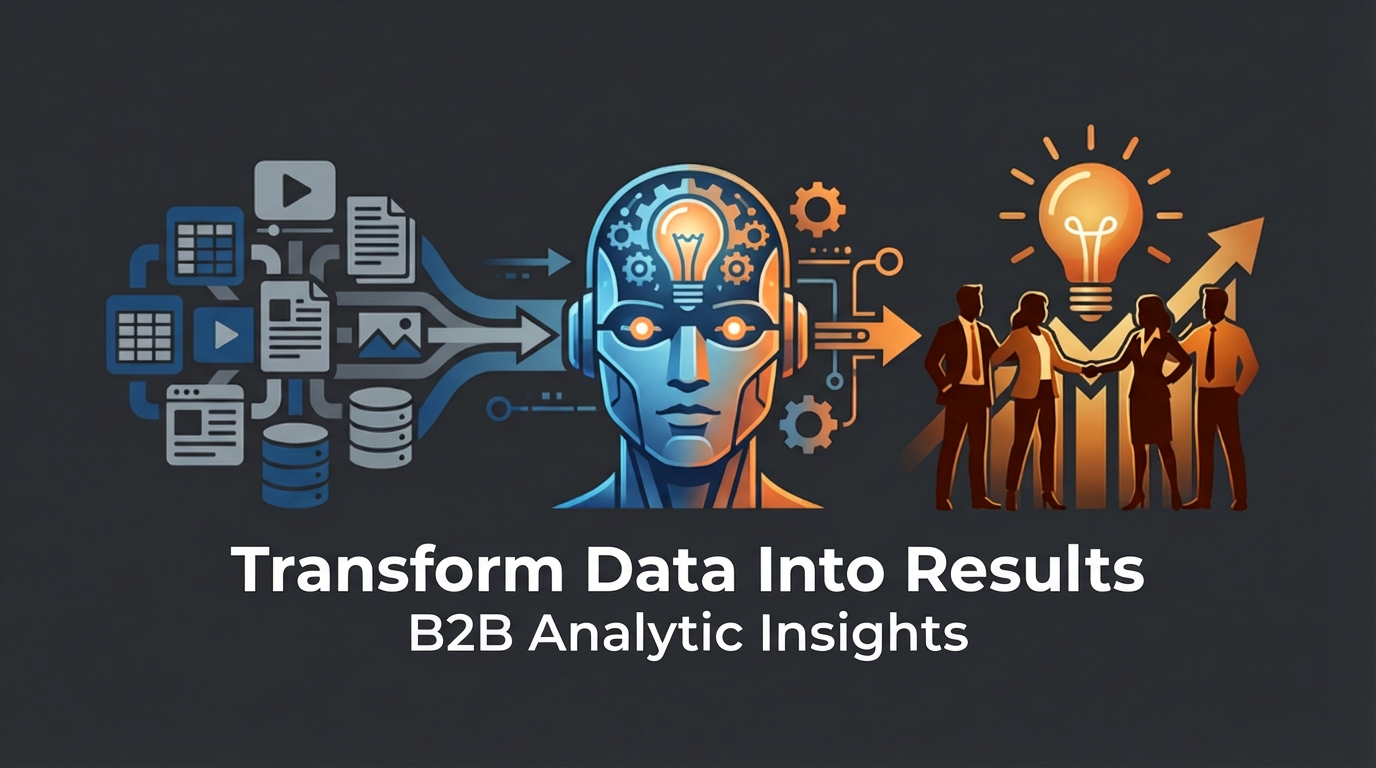

The landscape of business analytics is undergoing a profound shift. For years, we’ve championed data-driven decision making, meticulously building sophisticated models that promised to unlock competitive advantages. Yet, a persistent chasm has existed: the gap between a promising model in a Jupyter notebook and a robust, reliable analytics solution driving tangible business outcomes in production. This is where Machine Learning Operations, or MLOps, steps in, not as a technical afterthought, but as a strategic imperative. My experience, spanning over two decades in analytics, has shown that organizations struggling with the consistent, valuable deployment of their machine learning initiatives are fundamentally constrained by their operational maturity. We aren’t just talking about building better algorithms; we’re talking about building production-ready, continuously improving analytical capabilities that directly impact credit risk mitigation, financial analysis accuracy, and enterprise operations efficiency. This is the heart of true analytics transformation.
The C-suite often asks, “Where is the ROI on our analytics investments?” The answer, too frequently, lies in the shadows of under-operationalized models. The promise of AI and ML is immense, but without a solid MLOps foundation, that promise often dissolves into missed opportunities and wasted resources. We must move beyond the allure of theoretical model performance to the hard-won reality of measurable business impact. This article will delve into the core MLOps best practices essential for any enterprise looking to achieve sustainable, scalable, and impactful analytics. We’ll explore how these practices translate into real-world benefits, addressing both the opportunities and the inherent challenges.
The adage “garbage in, garbage out” has never been more relevant than in machine learning. The success of any model, regardless of its sophistication, is inextricably linked to the quality and consistency of the data it consumes. For sophisticated financial analysis or accurate credit risk scoring, this isn’t just about having data; it’s about having reliable, traceable, and well-understood data. This is where sound data and feature management practices become non-negotiable.
Establishing Data Quality and Integrity
At the bedrock of any MLOps strategy is a rigorous approach to data quality. This goes beyond simple validation. It involves defining and enforcing data schemas, ensuring that data adheres to expected formats and types. Tools like Great Expectations or TensorFlow Data Validation (TFDV) are invaluable here. They allow us to define expectations about our data and automatically validate incoming data against these expectations. For instance, in credit risk, a ‘loan_amount’ field must be a positive numerical value. Failure to validate this at ingest can lead to erroneous predictions and significant financial losses.
Beyond schema validation, statistical profiling and drift detection are critical. We need to understand the statistical properties of our data – its distribution, mean, variance, and potential outliers. Tools that perform statistical profiling can flag anomalies and identify data drift, where the characteristics of live data diverge from the training data. This could manifest as a sudden surge in applications from a new demographic profile, skewing credit risk models trained on historical data. Techniques like the Kolmogorov-Smirnov (KS) test or Population Stability Index (PSI) are essential for quantifying this drift.
The Power of Feature Stores
A major bottleneck in analytics transformation is the ad-hoc creation and management of features. This leads to duplicated effort, inconsistency across models, and a lack of reusability. This is why feature stores are becoming critical. Platforms like Feast or Tecton provide a centralized repository for curated, versioned, and production-ready features. This allows data scientists and engineers to discover, share, and consume features consistently. For example, a feature bank for credit risk might include ‘credit_utilization_ratio’, ‘debt_to_income_ratio’, and ‘payment_history_score’. Building these once and making them available across multiple credit scoring models dramatically accelerates development and improves model reliability.
Continuous Monitoring of Data Freshness and Completeness
Data freshness is paramount. Outdated data can render even the most advanced model obsolete. MLOps demands continuous monitoring of data freshness and null values. Are our income figures updated monthly? Is the loan application status reflecting real-time changes? Dashboards, often powered by tools like Grafana, can provide immediate visibility into these metrics. Recognizing data latency issues before they impact critical financial decisions is a hallmark of mature analytics operations. The ability to quickly identify and address data pipeline failures or delays prevents the “time-to-insight” from turning into a “time-to-obsolescence.”
In the realm of Machine Learning Operations (MLOps), understanding how to effectively integrate analytics into your workflows is crucial for maximizing the impact of your models. A related article that delves into this topic is titled “The Power of Analytics: Transforming Data into Meaningful Actions.” This piece explores how organizations can leverage analytics to drive decision-making and enhance operational efficiency. For more insights, you can read the article here: The Power of Analytics: Transforming Data into Meaningful Actions.
Version Control and Automation: The Engine of Agility
In the realm of analytics, change is not a bug; it’s a feature. Markets shift, consumer behavior evolves, and regulatory landscapes change. An analytics solution that cannot adapt quickly is a liability. This necessitates a robust approach to version control and automation, allowing us to manage the complexity of evolving models, data, and code.
Comprehensive Tracking of Models, Data, and Code
The foundation of any automated MLOps pipeline is meticulous version control. This isn’t just about Git for code. It extends to tracking models, data versions, hyperparameters, and experimental runs. Platforms like MLflow, Weights & Biases (W&B), and Databricks’ Unity Catalog are essential for this. Every trained model should be associated with the exact dataset it was trained on, the code version used, and the hyperparameters that produced its performance. This creates an auditable lineage, critical for regulatory compliance in financial services and for debugging when issues arise. The ability to pinpoint the exact configuration that led to a specific model version is invaluable for rollback and root cause analysis.
CI/CD for Analytics: Testing Everything
Continuous Integration and Continuous Deployment (CI/CD) have long been staples of software engineering. Applying these principles to analytics means implementing CI/CD pipelines for testing data quality, model bias, and drift before deployment. Automated data validation, as discussed earlier, is a crucial part of CI. Furthermore, pre-deployment checks for model bias – ensuring fair and equitable outcomes across different demographic groups, particularly in credit applications – are essential. Automated retraining on detected drift, triggered by these monitoring systems, ensures that models remain relevant and accurate.
Embracing Green AI and Edge AI Trends
The future of MLOps also points towards green AI and edge AI. Green AI focuses on optimizing models and infrastructure for energy efficiency, a growing concern for large-scale operations and a factor in calculating total cost of ownership. Edge AI, deploying models closer to the data source (e.g., on devices or local servers), reduces latency and enhances privacy, a significant benefit for real-time financial transaction analysis or fraud detection at the point of sale. Automating the deployment and management of these diverse deployment targets is a key MLOps challenge and opportunity.
Post-Deployment Monitoring and Observability: Staying Ahead of the Curve
Building and deploying a model is only the beginning of its lifecycle. The true test of an analytics initiative lies in its sustained performance and impact in the production environment. This requires diligent post-deployment monitoring and comprehensive observability. We need to understand not just if the model is running, but how it’s performing against business objectives and whether its underlying assumptions are still valid.
Proactive Tracking of Performance and Drift
Post-deployment monitoring is about continuously tracking model performance, detecting data drift and concept drift. Data drift refers to changes in the input data distribution, while concept drift signifies changes in the relationship between input features and the target variable. For example, in credit risk, the underlying economic factors influencing loan default (concept drift) might change independently of the borrower’s reported financial data (data drift). Tools like Evidently AI, WhyLabs, and Arize offer sophisticated capabilities for detecting and quantifying these drifts.
Crucially, monitoring must focus on business metrics, not just technical model accuracy. Alerting on a slight dip in AUC might be useful, but alerting on a significant increase in approved but high-risk loans, or a decrease in customer conversion rates, directly translates to business impact. This helps avoid alert fatigue and ensures that the monitoring system’s output is actionable for business leaders.
Establishing Effective Alerting and Testing Mechanisms
Effective alerting is key to a responsive MLOps system. Integrating monitoring tools with alerting platforms like Prometheus and Grafana allows for timely notifications when performance degrades or drift exceeds predefined thresholds. This enables swift intervention, whether it’s retraining the model, rolling back to a previous version, or investigating underlying data issues.
Beyond passive monitoring, shadow testing and A/B testing are powerful tools. Shadow testing allows a new model to run in parallel with the existing production model, feeding it live data and logging its predictions without impacting live decisions. This validates its performance in a real-world scenario. A/B testing then allows for the controlled rollout of a new model to a subset of users or transactions, comparing its performance directly against the incumbent. For enterprises, this means confidently deploying new credit scoring algorithms or fraud detection models with rigorous empirical evidence of their superiority.
Scalable Deployment and Infrastructure Essentials
The ability to deploy models reliably and at scale is a fundamental differentiator for analytics leaders. It’s not enough to have a great model; it must be accessible, performant, and reproducible in production. This requires attention to scalable deployment essentials, building an infrastructure that can handle the demands of enterprise-level analytics.
CI/CD/CT Pipelines for Model Deployment
The concept of CI/CD (Continuous Integration/Continuous Deployment) extends naturally into CI/CD/CT (Continuous Training) for machine learning. This means that not only is model code integrated and deployed continuously, but the model itself is continuously retrained based on new data or detected drift. This automated retraining loop is crucial for maintaining model relevance. Tools like MLflow, Kubeflow, and Airflow orchestrate these complex pipelines, managing the flow of data, code, and models through various stages of development, testing, and deployment.
Model Versioning and Registry
A model version registry is central to managing deployed models. This registry acts as a central catalog of all trained and deployed models, their versions, their associated metadata, and their performance metrics. It allows teams to easily retrieve, deploy, and roll back specific model versions. For example, a financial institution might have dozens of models for different risk segments, each with multiple versions. A robust registry ensures that the correct model is always deployed for the right task.
Addressing LLM Cost Optimization and Explainability
As Large Language Models (LLMs) become more prevalent in enterprise analytics, LLM cost optimization becomes a critical MLOps concern. This involves strategies for efficient inference, model quantization, and potentially the use of smaller, fine-tuned models. Furthermore, explainability remains a key requirement, especially in regulated industries. Tools and techniques that allow us to understand why an LLM made a particular decision are vital for building trust, ensuring fairness, and meeting compliance mandates. Langsmith, for instance, offers capabilities for debugging and understanding LLM interactions.
In the rapidly evolving field of machine learning, understanding the principles of MLOps is crucial for organizations looking to streamline their analytics processes. A related article that delves deeper into this topic is available at B2B Analytic Insights, where you can explore best practices that enhance collaboration between data scientists and operations teams. By implementing these strategies, businesses can ensure that their machine learning models are not only effective but also scalable and maintainable in the long run.
Governance, Security, and Human Expertise: The Unsung Heroes
“`html
| Best Practice | Description |
|---|---|
| Version Control | Keep track of changes to models, code, and data |
| Automated Testing | Ensure models and code perform as expected |
| Continuous Integration/Continuous Deployment (CI/CD) | Automate the process of deploying models into production |
| Model Monitoring | Track model performance and detect drift |
| Collaboration and Communication | Facilitate teamwork and knowledge sharing among data scientists and engineers |
“`
Beneath the sophisticated tooling and automated pipelines lies the critical need for robust governance, unwavering security, and the indispensable element of human expertise. Technology alone cannot deliver analytics transformation; it must be guided by principles and empowered by people.
Implementing Comprehensive Security and Governance Frameworks
Security and governance are not optional extras; they are foundational requirements. This includes implementing Role-Based Access Control (RBAC) to ensure only authorized personnel can access sensitive data and models, and maintaining detailed audit logs to track all activities. Encryption of data and models at rest and in transit is paramount, especially in financial services dealing with highly sensitive information. For LLMOps, incorporating Retrieval Augmented Generation (RAG) with vector databases can offer an added layer of privacy and control over the information models can access. Tools like Databricks’ Unity Catalog provide a unified governance layer for data, models, and features, simplifying compliance and security management.
The Indispensable Role of Human Expertise
While automation is a driving force in MLOps, it is crucial to recognize that analytics requires both technology and human expertise. Data scientists, ML engineers, domain experts, and MLOps practitioners all play vital roles. The ability to interpret model outputs, understand business context, design effective experiments, and make strategic decisions based on analytical insights remains a human endeavor. MLOps aims to augment human capabilities, not replace them. This means investing in training, fostering collaboration between technical and business teams, and creating a culture that embraces continuous learning. The “active/passive data monitoring for drift/retraining” discussed in best practices highlights this: the systems monitor and trigger, but humans often guide the interpretation and intervention strategy.
In the rapidly evolving field of data science, understanding the principles of Machine Learning Operations is crucial for optimizing analytics workflows. For those looking to deepen their knowledge, a related article on MLOps best practices can provide valuable insights into streamlining processes and enhancing collaboration between data scientists and operations teams. You can explore this informative piece further by visiting this link, which offers a comprehensive overview of effective strategies in the realm of MLOps.
Conclusion: Charting the Course for Analytics Transformation
The journey to a truly data-driven organization is paved with robust MLOps practices. For over two decades, I’ve witnessed firsthand the transformative power of moving beyond ephemeral insights to reliable, scalable analytics solutions. The challenges are real – the complexity of data, the evolving nature of models, the demand for speed, and the imperative for governance. However, the opportunities are far greater.
Organizations that embrace these MLOps best practices are not just deploying machine learning models; they are building engines of continuous improvement. They are achieving faster time-to-insight, making more accurate data-driven decisions, and realizing significant ROI in areas like credit risk mitigation, predictive financial forecasting, and the optimization of enterprise operations.
My recommendation to C-suite executives is clear: Invest in your analytics infrastructure as strategically as you invest in your core business. Prioritize MLOps not as an IT project, but as a business imperative for competitive advantage. To analytics leaders, I urge you to champion these practices, foster a culture of operational excellence, and empower your teams with the right tools and processes. To practitioners, your technical mastery is essential, but understanding how your work integrates into the larger operational ecosystem is what will truly elevate its impact. The era of operationalizing analytics with MLOps is not just coming; it’s here, and the organizations that master it will define the future of their industries.