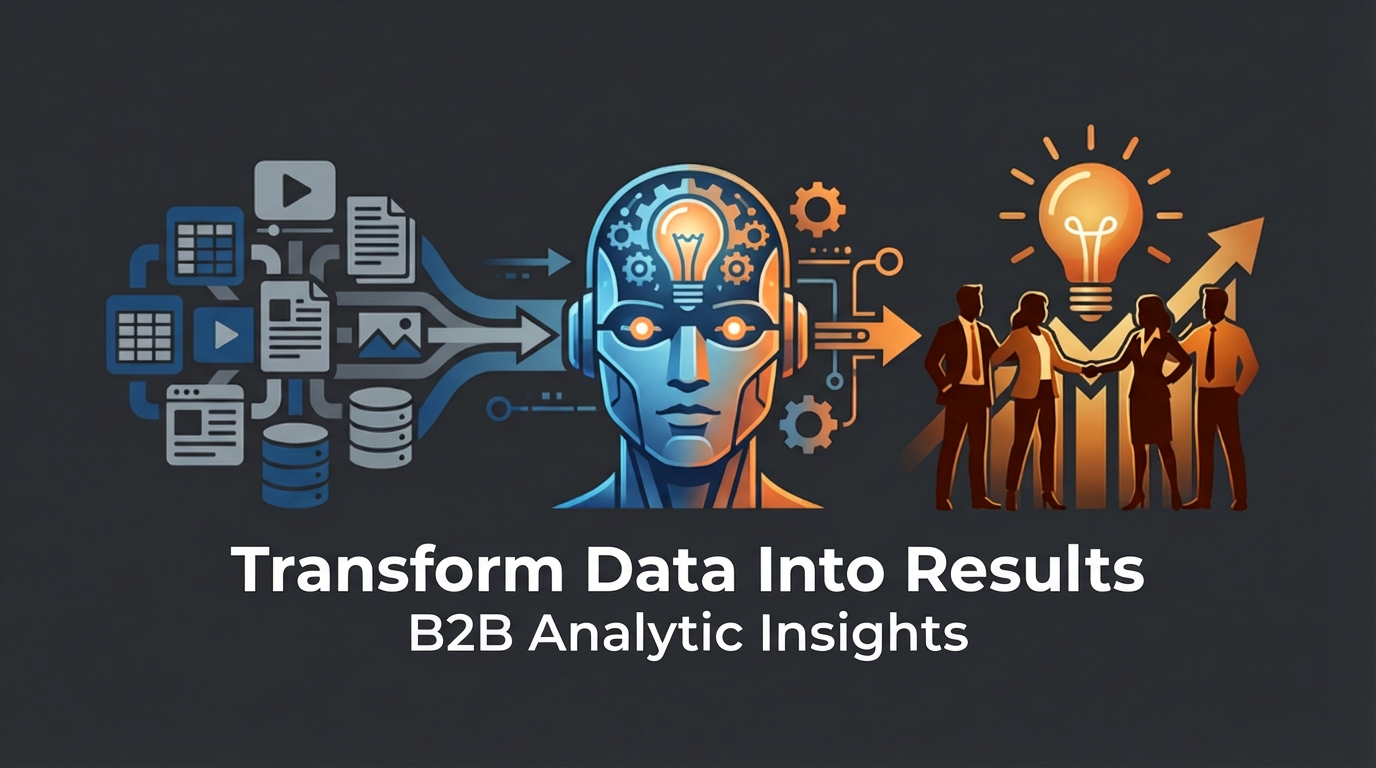

We make credit decisions every day impacting thousands of commercial entities. These decisions carry real consequence. Our systems, increasingly powered by AI, shape these outcomes. Trusting these systems is not optional. It is fundamental. We need clear answers to essential questions.
The Foundation of Trust: Context and Instructions
Data alone is not enough. Insights require context. AI systems, no matter how sophisticated, are only as good as the understanding they build around the data. We need to know what they saw, and what we told them to do.
What Context Did the System Receive?
Our systems ingest vast amounts of data. This ranges from audited financials and public filings to market intelligence and operational data. When an AI system presents a credit recommendation, we must understand the data it considered. This goes beyond a simple list of inputs. It requires traceability.
We’re facing increasing external scrutiny on this point. Examiners want to see the specific source documents and financial data. This isn’t just about presence; it’s about linkage. Can we tie every input back to its origin file? Can we prove the system used the Q3 filing, or the latest trade credit report, or the internal operational efficiency score from last month?
This is a diagnostic exercise. It explains why a particular outcome occurred. If a model flags a client for increased risk, we need to immediately retrieve the specific data points that triggered that flag. This isn’t just for regulatory compliance. It’s for our own confidence. It lets us validate the data quality used by the AI. It allows us to identify potential biases in the input. If the model relied heavily on an outdated report, we need to know that.
Our decades of experience tell us that data quality is paramount. AI amplifies this truth. Garbage in, amplified garbage out. Ensuring the system’s context is transparent means we are actively managing this critical risk. We are not outsourcing our accountability. We are enhancing our insight.
What Instructions Did We Give It?
AI systems execute instructions. These instructions shape their analysis, their risk appetite, and their eventual recommendations. We must understand these directives.
This means prompt logging. It means visibly displaying configurations, parameters, and rules. Too often, these are treated as opaque, proprietary components by vendors. This is unacceptable. These are our instructions to the machine. We own them. We must be able to reconstruct them.
Think of it as the policy manual for the AI. If our internal credit policy states a maximum exposure for a specific industry segment, is the AI system configured with that exact parameter? If we want the system to prioritize cash flow generation over asset-based lending in stressed scenarios, are those instructions explicitly embedded and visible?
This is a prescriptive function. We are defining the guardrails and objectives for the AI’s operation. If the system recommends a specific loan structure, we need to understand the underlying instructions that led to that recommendation. Did we instruct it to optimize for yield? Or for risk mitigation? Or for a balance of both?
This also ties into our internal controls. Any changes to these instructions must be auditable. Version control is not just for code; it’s for the AI’s instruction set. We establish parameters; the AI operates within them. This visible instruction set ensures alignment between our strategic objectives and the tangible outputs of the AI system. It prevents the “black box” syndrome and allows us to retain control of the decision-making process.
The Human Element: Review and Oversight
AI is a tool. It augments our capabilities. It does not replace our judgment. Human oversight remains central to responsible credit operations. We need clear evidence of this oversight.
Who Reviewed the Output?
When an AI system generates a credit memo, a risk assessment, or a portfolio rebalancing suggestion, human eyes must review it. This review cannot be a perfunctory click. It must be meaningful.
We need a documented trail of this review. Who specifically reviewed each section of the AI-generated output? When did they review it? What were their observations? What edits did they make? A simple “approved” timestamp is insufficient. We need granular detail.
This is fundamentally a diagnostic process. The human reviewer is diagnosing the AI’s output. They are checking for accuracy against our credit policies. They are assessing the reasonableness of the recommendation in light of qualitative factors the AI may not fully grasp. They are applying their decades of experience and market intuition – insights that no model can fully replicate.
Consider a loan application for a new business segment. The AI might pull comparable data. A human reviewer, with specific knowledge of that segment’s unique risks and opportunities, will bring invaluable perspective. The system might highlight certain financial ratios. The human reviewer can contextualize those ratios within a broader economic trend or a specific management team’s history.
This documentation serves multiple purposes. It validates the output. It creates a robust audit trail. It reinforces accountability. Most importantly, it ensures that judgment, not just calculation, underpins our decisions. We are not merely rubber-stamping. We are actively shaping.
What Edits Were Made, and When Was Approval Granted?
The human review process often involves modifications. The AI might provide a strong baseline, but our credit professionals refine it. These refinements are critical.
We need to capture the specific edits made to AI-generated content. If a risk rating was adjusted, why? If a covenant was added, what was the rationale? This detail is not optional. It demonstrates active engagement.
This is a combination of descriptive and prescriptive analytics. The edits themselves describe how the human reviewer improved or corrected the AI’s initial assessment. The final approved version then prescribes the course of action. Every change provides a learning opportunity. It highlights areas where the AI model might need adjustment, or where human expertise provides a necessary complement.
This level of detail is also crucial for training and model improvement. If our teams consistently adjust the AI’s assessment of intangible assets, for example, that insight should feed back into model development. It tells us where the model’s understanding is strong, and where our human judgment still provides superior insight.
The timestamp of approval is the final step in the human review process. It signifies the point of accountability. This isn’t just about who reviewed; it’s about what they changed and when they committed to it. This chain of custody for decisions is non-negotiable.
Replicability and Future Confidence
Our systems operate in dynamic environments. Models evolve. Data changes. Yet, our past decisions must remain intelligible and verifiable. This requires rigorous reproducibility.
Can We Reproduce a Specific Output Years Later?
Credit decisions have long horizons. A loan made today can impact our portfolio for years. We must be able to understand the basis of that decision at any point in the future.
This means reproducibility. Can we, five years from now, recreate the exact credit assessment, the exact risk score, or the exact pricing recommendation that the AI system generated on a specific date for a specific entity? This is a growing governance requirement.
This isn’t about running the current version of the model on old data. It’s about using the version-pinned model that was active at that specific time. It requires snapshot logging of the generation context. This includes the model version, the exact dataset used (down to the data snapshot date), and the specific configurations and instructions in place at that moment.
This is a descriptive and diagnostic capability. It explains what happened and why it happened. If a loan goes into default, we need to fully comprehend the initial granting decision. What data was available? What model was used? What were its parameters? Without this, our ability to learn from past performance, to defend our decisions, and to ensure consistent governance, is severely hampered.
Our experience shows that environments change. Data schemas evolve. Model architectures are updated. Without version control on models and data snapshots, recreating past results becomes impossible. We lose our institutional memory. We lose the ability to prove the integrity of our historical decisions. This is foundational to long-term trust in our systems.
Reproducibility is our insurance policy for accountability. It ensures that every decision can be retrospectively audited, understood, and defended. It’s what gives us, and our stakeholders, enduring confidence in our credit operations. This isn’t ‘set it and forget it.’ This is ‘understand it now and recall it later.’
These four questions are not theoretical. They are practical requirements for any AI-powered credit system. Our focus remains on transforming data into results. These questions ensure those results are grounded, traceable, and trusted.