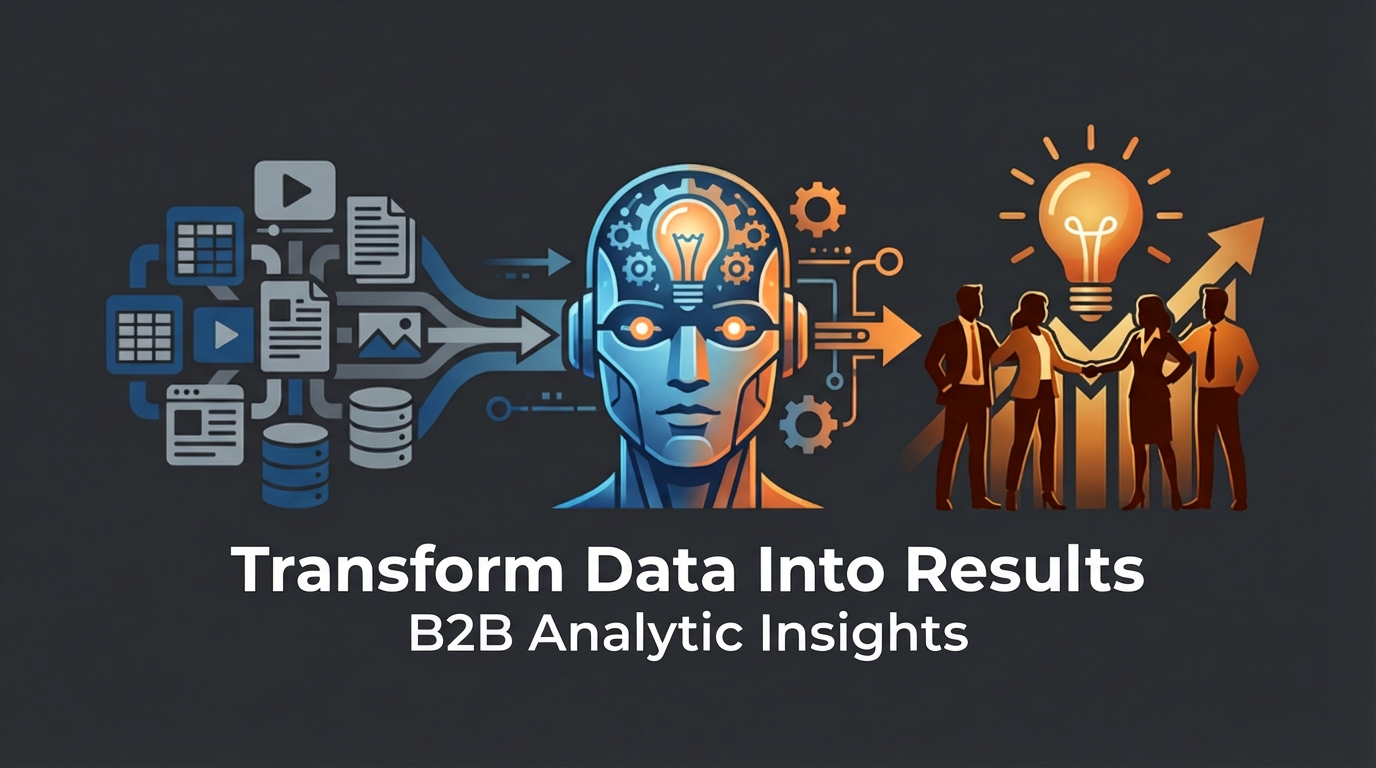

The commercial credit portfolio speaks. We must listen. It tells us where risks are building, where opportunities emerge. Decades of work prove this. Thousands of commercial entities form a complex narrative. Our job is to read it, early and accurately.
Moving Beyond the Rearview Mirror
Traditional credit analysis often looks backward. Past performance is a guide, not a guarantee. We need to see the storm approaching, not just its aftermath. This means shifting focus. Descriptive analytics provide the history. Diagnostic analytics explain current state. Neither is sufficient for proactive management. We aim further. We transform raw data into a forward-looking view.
The Portfolio as a Living System
Think of your portfolio. It is not static. It breathes. It evolves. Each company within it faces its own market dynamics, its own challenges. Aggregate these individual stories. A collective narrative emerges. Our task is to discern the patterns, the subtle shifts that indicate future movement. This requires a dedicated approach.
Risks do not appear in a vacuum. They build. They often present as weak signals first, then strengthen. Our goal is to detect these early. The sheer volume of entities in a large commercial portfolio makes this challenging. It also makes it imperative.
Unmasking Hidden Vulnerabilities
Financial statements provide a snapshot. They are essential. They are also lagging. Other data streams offer contemporaneous views. Supply chain disruptions, for example, cascade. A critical supplier’s distress impacts many. Early intelligence here is vital.
Credit defaults seldom happen overnight. Liquidity pressures build. Operational inefficiencies mount. Management turnover can be an early indicator. Changes in payment patterns, even subtle ones, merit attention. We look for these signals. We prioritize them.
Data Aggregation and Normalization
Diverse data sources provide a richer picture. Public filings, news sentiment, industry benchmarks, transactional data. Each contributes. Combining them presents a challenge. Normalizing disparate data types is critical. Meaningful comparison depends on it. We build systems that achieve this consistency. We create a unified view.
Transforming Data into Insights
Raw data alone holds little value. It must be processed. It must be interpreted. This is where intelligence transforms. Analytics provide the lens. They reveal the stories hidden within the numbers.
Predictive Modeling for Future Scenarios
We build models. These models predict. They forecast potential outcomes. They do not predict with certainty, but with probability. They identify which entities are most likely to experience distress. They also flag which are poised for growth. This is predictive analytics in action.
We feed these models with a broad spectrum of data. Financial ratios, industry trends, macroeconomic indicators are inputs. Non-traditional signals also contribute. Geopolitical shifts, for example, create ripples. Supply chain brittleness becomes a leading indicator.
Harnessing AI-driven analytics accelerates this process. Sophisticated algorithms identify complex relationships. They uncover patterns invisible to the human eye. They process massive data volumes at speed. This is not magic. It is advanced statistical inference.
Prescriptive Actions for Risk Mitigation
Prediction alone is incomplete. We need action. Prescriptive analytics identifies specific interventions. It suggests what to do. For a high-risk entity, this could mean stricter covenants. It could mean increased monitoring. For an opportunity, it could mean proactive engagement.
This requires careful calibration. Recommended actions must be proportionate. They must be commercially viable. Our systems do not decide. They inform decision-makers. They provide an evidence base.
Supply Chain Intelligence: A New Front Line

The interconnectedness of businesses means a problem for one can quickly become a problem for many. Supply chain intelligence provides critical context. It offers an early warning system.
Mapping Interdependencies
Understanding who depends on whom is foundational. Which of our obligors rely on a single, vulnerable supplier? Which are exposed to high-risk geographies? These are not hypothetical questions. They are real exposures.
We map these interdependencies. We visualize them. This identifies critical nodes. It highlights potential choke points. This intelligence informs our credit decisions. It enhances risk assessment.
Monitoring Supply Chain Health
Beyond mapping, we monitor. We look for signs of stress within critical supply chains. Production delays. Logistics bottlenecks. Input cost spikes. These can all precede direct financial distress for our own obligors.
AI-driven analytics plays a key role here. It processes vast amounts of supplier data, news feeds, and global trade statistics. It flags anomalies. It alerts us to emerging patterns of weakness. This proactive stance is essential. It moves us from reactive to predictive.
Decision Intelligence: Empowering the Portfolio Manager

Ultimately, all this analysis funnels into decision-making. Our goal is to empower portfolio managers. We provide them with clear, actionable insights. We do not replace their judgment. We enhance it.
Delivering Actionable Insights, Not Just Data
A dashboard full of numbers is not an insight. An insight is a conclusion, supported by data, that drives action. Our systems transform data into these insights. They answer: “So what? Now what?”
We frame insights clearly. We link them directly to portfolio entities. We highlight the estimated impact. This allows for rapid, informed response. Portfolio managers need to quickly grasp the implications.
Fostering Collaborative Environments
Decision-making in commercial credit is rarely unilateral. It involves analysts, credit officers, relationship managers. Our tools facilitate this collaboration. They provide a shared understanding of risk.
They allow teams to explore scenarios together. “What if this supplier fails?” “What if this industry faces a sudden downturn?” The answers are data-driven. The discussions are richer. The decisions are stronger.
The Future: Continuous Learning and Adaptation
| Company Name | Industry | Revenue | Profit Margin |
|---|---|---|---|
| ABC Corporation | Technology | 1,000,000 | 10% |
| XYZ Inc. | Manufacturing | 500,000 | 5% |
| 123 Company | Retail | 750,000 | 8% |
The commercial landscape constantly shifts. New risks emerge. New opportunities arise. Our approach must adapt. It must learn.
Iterative Model Refinement
Our analytics models are not static. They constantly learn from new data. They are refined. Performance is tracked. When a prediction deviates from reality, the model learns. It adjusts. This continuous feedback loop improves accuracy over time.
This adaptive capability is crucial. Economic cycles turn. Market dynamics change. Our tools must reflect current realities. This is about staying ahead.
Human and Machine Intelligence
The most effective systems combine human expertise with machine capabilities. Machines process scale. Humans provide judgment, nuance, and strategic thinking. Machines identify patterns. Humans interpret them in context.
Our systems are designed to augment, not replace. They present the machine’s findings. They allow the human expert to apply their years of experience. This combination yields superior outcomes. It delivers tangible results. It transforms data into decisive action.