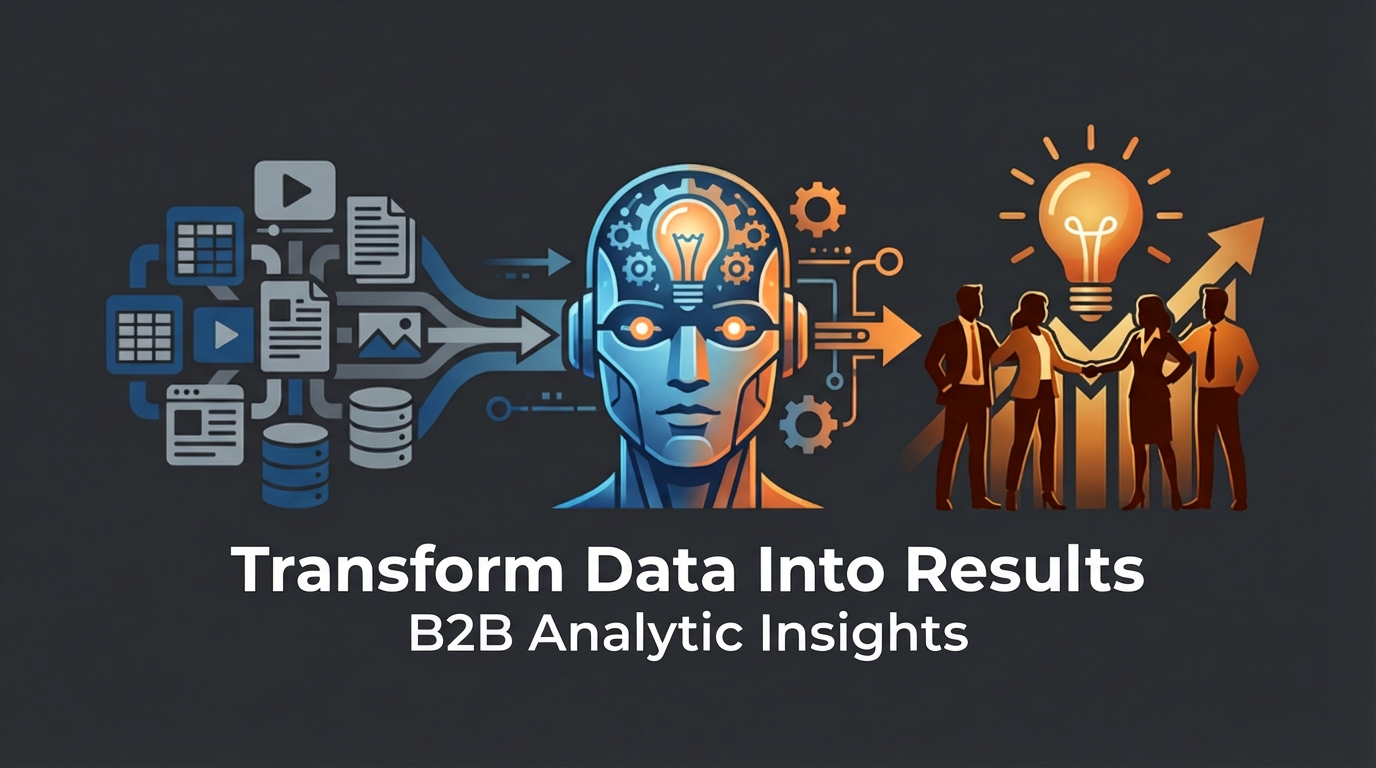

Your Accounts Receivable data holds profound insights. It tells a continuous story about your customers, your sales, and your own operational health. The question is not whether the data is talking. It is whether you are truly listening. And, crucially, what you do with what you hear. This is not about advanced theory. This is about practical application in your daily work. It is about transforming information into concrete action. Action that drives better outcomes. Action that secures your financial position.
We have spent decades in this field. We have seen thousands of commercial entities navigate complex financial landscapes. We understand the pressures. We understand the need for clear, actionable intelligence. Your AR data is a rich, often untapped, source of that intelligence. It offers a window into credit risk. It illuminates supply chain dynamics. It empowers better decision making. It can be a powerful engine for financial performance. But data alone does not achieve this. It requires your expertise. It requires your judgment. It requires a commitment to understanding what the numbers truly signify.
The Foundation: Understanding Your AR Story
Accounts Receivable is more than just a list of who owes you money. It is a dynamic reflection of your business relationships. It shows who is paying on time, who is struggling, and who represents an escalating risk. This raw data, when properly examined, provides critical diagnostic insights. You can see patterns emerge. You can identify trends in payment behavior. This helps you understand the health of your customer base. It signals potential issues before they become critical.
Descriptive Analytics: Painting the Current Picture
At its most basic, your AR data provides a descriptive account of your financial position. This includes standard reports on aging receivables, current balances, and overdue amounts. These reports are the starting point for any analysis. They answer the fundamental questions: “What is our current AR status?” and “Who owes us what, and for how long?” This level of understanding is essential for basic cash flow management. It ensures that you know your immediate financial standing. It is the bedrock upon which all further insights are built. Without this clarity, you are flying blind.
Diagnostic Analytics: Digging Deeper for Causes
Where descriptive analytics tells you what is happening, diagnostic analytics helps you understand why. This is where you start to move beyond simple reporting. You examine the AR data in conjunction with other operational data. Why are certain customer segments consistently paying late? Is it due to terms of sale, sector-specific challenges, or issues with our invoicing process? By correlating payment delays with customer attributes, order history, or even external economic indicators, you can diagnose the root causes of delinquency. This moves you from reactive management to proactive problem solving. It allows you to address the underlying issues, not just the symptoms.
The Power of Cohorts
One common diagnostic approach involves looking at customer cohorts. Grouping customers by the date they began doing business with you, or by their industry sector, can reveal significant differences in payment behavior. Are newer customers slower to pay than established ones? Do customers in a particular industry consistently exhibit longer payment cycles? This kind of segmentation moves you beyond aggregate numbers. It highlights specific areas where performance deviates from the norm. This granular view is vital for tailored credit policies and collection strategies.
Beyond the Surface: Predictive Insights from AR
The real power of your AR data lies in its potential for prediction. By analyzing historical payment patterns, you can forecast future customer behavior. This is where you transition from understanding the past and present to anticipating the future. Predictive analytics transforms static data into a forward-looking tool. It allows you to identify customers who are likely to become delinquent. It helps you anticipate potential cash flow shortages. This foresight is invaluable for financial planning and risk mitigation.
Predictive Analytics: Forecasting Future Trends
Predictive models analyze historical AR data, credit scores, and other relevant factors. They identify patterns that signal an increased likelihood of late payment or default. For credit professionals, this means being able to flag accounts that require closer monitoring before they become significantly overdue. For supply chain managers, it offers insight into the financial stability of key partners. The goal is to move from surprise to preparation. It is about knowing where the potential problems lie and having a plan in place.
Early Warning Systems
Think of this as building an early warning system. By setting thresholds based on statistical models, you can trigger alerts when a customer’s payment behavior begins to deviate from predicted patterns. This could be a subtle shift in average payment time, an increase in partial payments, or a change in communication response times. These alerts are not definitive pronouncements of doom. They are signals to investigate further. They prompt a targeted review by a credit analyst who can then apply seasoned judgment to the situation. This combination of AI-driven prediction and human expertise is remarkably effective.
Impact on Credit Decisions
The impact on your credit decisions is profound. Instead of relying solely on static credit reports or payment history alone, you can incorporate predictive scores. This can lead to more nuanced credit limit setting. It can inform collection strategies. It allows you to allocate your resources more effectively, focusing on accounts that genuinely need attention. It moves your credit function from being a gatekeeper to a strategic partner in revenue assurance.
Operationalizing Insights: Prescriptive Actions
Predictive insights are excellent. But they are most valuable when they lead to clear, actionable recommendations. Prescriptive analytics goes a step further. It not only predicts what will happen but also suggests what you should do about it. This is the most advanced stage of data analysis. It brings together descriptive, diagnostic, and predictive findings to recommend specific courses of action.
Prescriptive Analytics: Guiding Your Next Steps
Prescriptive analytics uses the information gathered from earlier stages to recommend optimal actions. For instance, if a predictive model flags a customer as high risk, prescriptive analytics might suggest a specific collection strategy. This could involve offering a payment plan, adjusting credit terms for future orders, or escalating the account for review by senior management. It provides concrete, data-backed recommendations to your team.
Automated Recommendations and Workflows
In a mature system, these recommendations can be automated, integrated into existing workflows. Imagine an AR system that, based on a customer’s risk profile and payment history, automatically suggests the next best action for an AR specialist to take. This could be sending a personalized reminder email, scheduling a call, or flagging the account for a credit review. This not only improves efficiency but also ensures consistency in how risk is managed across your organization. The human element remains critical for complex edge cases, but the system handles the routine, data-driven decisions.
Optimizing Collection Strategies
This is particularly powerful when applied to collections. Instead of a one-size-fits-all approach, prescriptive analytics allows for highly targeted interventions. It can recommend the timing, channel, and even the specific messaging for collection outreach based on what has historically proven most effective for similar customer segments. This significantly improves collection rates and reduces the cost of collections. It turns your AR department into a finely tuned revenue recovery machine.
The Role of AI and Advanced Analytics
Artificial intelligence is not a buzzword. It is a set of powerful tools that can unlock the latent potential within your AR data. AI-driven analytics can process vast amounts of information far more efficiently than manual methods. It can identify complex patterns that human analysts might miss. This is about augmenting, not replacing, your expertise. It is about giving your team better tools to do their jobs.
AI-Driven Analytics: Enhancing Your Capabilities
AI and machine learning algorithms can analyze massive datasets. They can identify subtle correlations between payment behavior, economic indicators, industry trends, and customer specific data. This allows for more accurate predictive models. It enables the identification of new risk factors. AI can also automate many of the repetitive tasks involved in data analysis, freeing up your team to focus on higher-value activities.
Beyond Traditional Credit Scoring
Traditional credit scoring often relies on a limited set of historical financial data. AI can integrate a much broader spectrum of data. This can include your own payment history with the customer, their purchasing patterns, industry-specific risk profiles, and even sentiment analysis from publicly available information. This creates a more holistic and forward-looking view of creditworthiness. This is particularly important in today’s dynamic economic environment.
Continuous Learning and Improvement
One of the key advantages of AI is its ability to learn and adapt. As new data becomes available, AI models can be retrained and refined. This means your predictive capabilities improve over time. Your understanding of risk becomes more sophisticated. This is not a static solution. It is a dynamic engine that continuously enhances your decision-making power. The systems learn from outcomes, becoming more effective with each cycle.
Integrating Supply Chain Intelligence
Your AR data is intrinsically linked to your supply chain. The ability of your customers to pay is directly influenced by their own operational and financial health, which is a direct outcome of their supply chains. Integrating this intelligence amplifies the value of your AR insights significantly.
Supply Chain Dynamics and AR Health
Consider the ripple effects. A disruption in a key supplier’s operations can impact your customer’s ability to produce goods. This, in turn, can affect their ability to pay you. By understanding the broader supply chain landscape, you can gain early indications of potential AR issues. This might involve monitoring news related to your customers’ critical suppliers, or analyzing industry-wide raw material price fluctuations that could impact your customers’ cost structures.
Cross-Functional Collaboration for Deeper Insights
This requires collaboration across departments. AR and credit teams need to work closely with procurement and supply chain management. Sharing intelligence about supplier risk or logistical challenges can provide crucial context for AR analysis. This partnership can pre-emptively identify customers who may face future payment difficulties due to supply chain disruptions. This holistic view is more robust than any single department can achieve alone.
External Data for Comprehensive Assessment
Augment your internal AR data with external supply chain intelligence. This can include data on logistics bottlenecks, commodity prices, supplier financial stability reports, and even geopolitical risk assessments that could impact global supply routes. When integrated with AR data, this external intelligence can provide an unparalleled view of customer risk. It enables you to anticipate challenges before they manifest as late payments.
Transforming Data into Actionable Intelligence
Your AR data is not just a recording of past transactions. It is a living document. It is a critical source of insight into the financial health of your customers and the broader economic environment. By embracing descriptive, diagnostic, predictive, and prescriptive analytics, powered by AI, you can unlock its full potential.
Listening to Your AR Data
The critical step is to move from passive observation to active engagement. Are you setting up systems to continuously monitor this data? Are you empowering your teams with the tools and training to interpret these insights? Are you fostering a culture where data-driven decisions are the norm? This is the journey from simply having data to truly using it. It is about transforming raw numbers into strategic advantage. It is about securing your financial future by understanding and acting upon the clear messages that your Accounts Receivable is sending you. The time to listen is now. The insights are waiting.