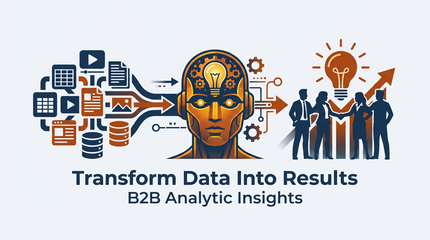
The C-suite demands results. They demand predictable revenue, optimized operations, and mitigated risk. In today’s hyper-competitive B2B landscape, achieving these outcomes hinges on robust, reliable data-driven decision making. Yet, the black box of data processing and increasingly, AI systems, often obscures the very insights we seek to generate. We talk about analytics transformation, but true transformation doesn’t just generate more reports; it instills unwavering trust in the underlying data. This trust is fundamentally built on data lineage, a concept historically relegated to the back-office, but now emerging as the bedrock of AI governance and the linchpin of analytical transparency.
The Strategic Imperative: Why Data Lineage is No Longer Optional
For two and a half decades, I’ve seen countless organizations grapple with data quality, integration headaches, and the perennial question, “Can I trust this number?” In credit risk, a faulty data point can lead to millions in losses. In enterprise operations, an inaccurate forecast can disrupt supply chains. And in financial analysis, erroneous data can misguide investment strategies entirely. Data lineage, the comprehensive record of data’s origin, transformations, and consumption, is no longer a “nice-to-have”; it’s mission-critical infrastructure. It’s the audit trail that separates confident decision-making from costly guesswork.
Historically, we viewed lineage through the narrow lens of ETL processes and database tables. That era is over. The advent of AI, particularly in high-stakes B2B applications, has dramatically expanded the scope and urgency of lineage tracking. We’re now talking about tracing not just a data warehouse table, but the individual features feeding an ML model, the specific version of that model, the AI-generated outputs, and even the inference layer for agentic AI. This shift isn’t academic; it’s a practical necessity to maintain control, ensure accountability, and unlock the true value of AI in our B2B operations.
In the realm of data management, understanding the flow and transformation of data is crucial for ensuring analytics transparency. A related article that delves deeper into this topic is “Data Lineage Tracking: AI’s Role in Analytics Transparency,” which explores how artificial intelligence can enhance the visibility and traceability of data throughout its lifecycle. For more insights on this subject, you can read the article here: Data Lineage Tracking: AI’s Role in Analytics Transparency.
Unpacking AI’s Role in Modern Data Lineage
The complexity of today’s data ecosystems, coupled with the sheer volume and velocity of data, makes manual lineage mapping an impossible task. This is where AI moves from being the problem to being a critical part of the solution. Automation is no longer a luxury; it’s the only viable path forward.
Automated Discovery and Mapping: From Static to Dynamic
Traditional lineage tools often relied on parsing static code or manual input. This simply doesn’t scale for dynamic, rapidly evolving data pipelines and complex AI systems. AI, through techniques like natural language processing (NLP) and machine learning (ML), can automatically scan and interpret metadata, schema changes, and even code repositories to discover data flows.
- Graph-based Lineage: AI algorithms excel at building intricate graph representations of data dependencies, revealing hidden connections that human analysis would miss. This provides a holistic, end-to-end view from source system to final AI-driven insight.
- Pattern Recognition: AI can identify common data transformation patterns, even across disparate systems, accelerating the mapping process and reducing the burden on data engineers. This is particularly valuable in environments with hundreds or thousands of data sources.
- Predictive Lineage: Going a step further, AI can even predict potential data flow changes or anomalies based on historical patterns, giving organizations a proactive stance on data governance. Imagine being alerted to a potential data quality issue before it impacts your credit risk models.
Enhanced Metadata Management: The Contextual Layer
Lineage is only as valuable as the context surrounding it. AI-powered metadata management enriches lineage by automatically extracting, classifying, and linking contextual information.
- Automated Tagging and Classification: AI can automatically tag data assets with relevant business terms, regulatory classifications (e.g., PII, sensitive financial data), and even data quality metrics, providing rich context to every node in the lineage graph.
- Relationship Discovery: Beyond direct data flows, AI can uncover implicit relationships between data assets, helping to build a more comprehensive understanding of the data landscape. This is crucial for understanding the wider impact of data changes.
- Semantic Understanding: Using NLP, AI can interpret natural language descriptions in data dictionaries and business glossaries, connecting them directly to technical lineage, bridging the gap between business and technical understanding. This is vital for time-to-insight, as it allows business users to quickly understand the provenance and meaning of data.
Anomaly Detection and Proactive Governance: Trust at Scale
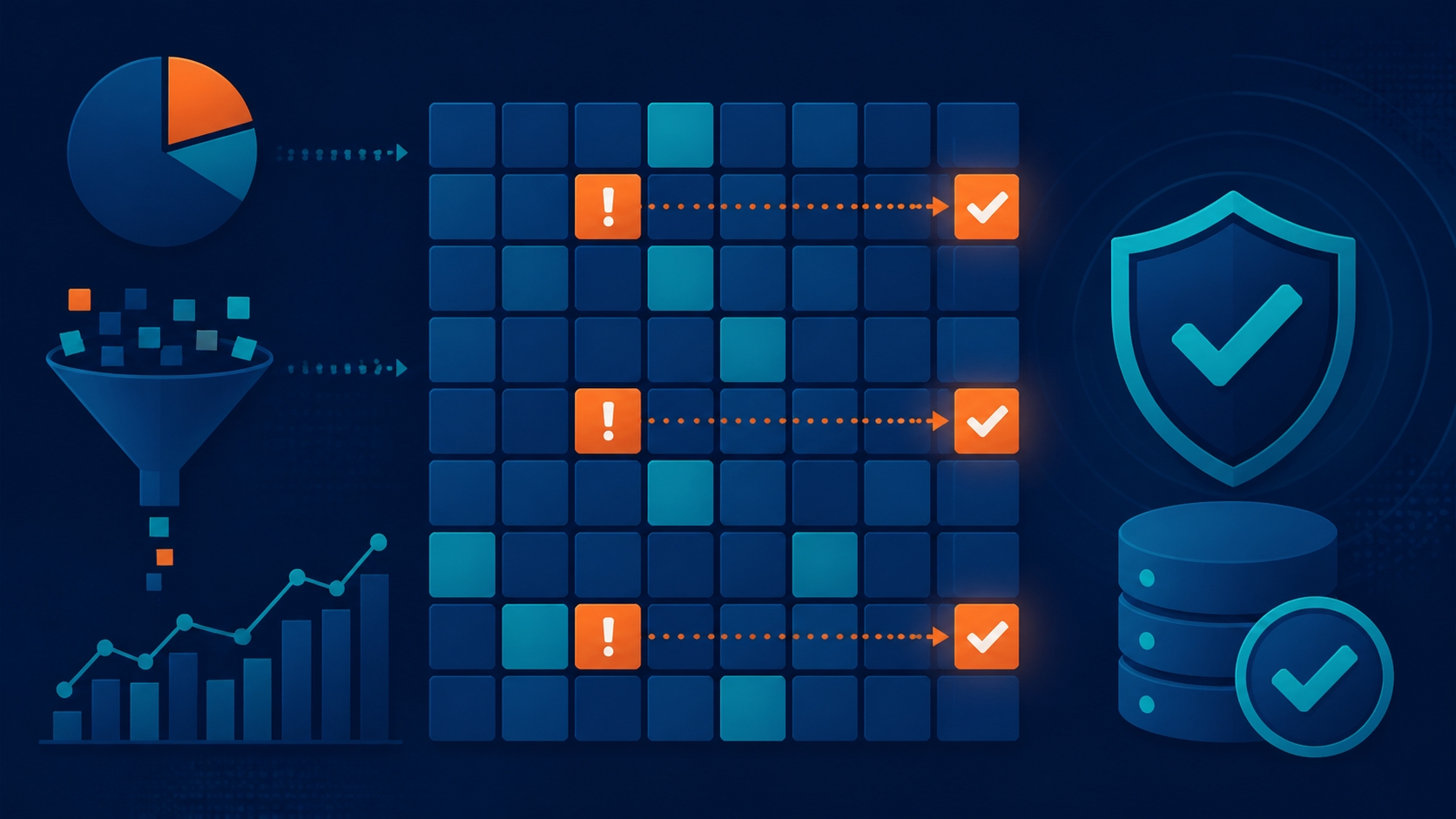
The ultimate goal of strong lineage, particularly with AI augmentation, is to instill trust. AI can constantly monitor data flows, detect deviations, and alert stakeholders, transforming governance from a reactive exercise into a proactive defense.
- Drift Detection: AI models can monitor changes in data distribution or schema over time, flagging potential data drift that could impact downstream analytics or AI models. This is critical for maintaining model performance in dynamic environments.
- Compliance Monitoring: By integrating lineage with regulatory requirements (e.g., GDPR, CCPA, EU AI Act), AI can automatically verify adherence and flag potential compliance breaches, generating auditable reports on demand. This moves us closer to a world where “auditable, end-to-end lineage for high-risk AI systems” is not just a regulatory buzzword, but an operational reality.
- Automated Impact Analysis: When a data source changes, AI can instantly calculate the downstream impact on all dependent reports, dashboards, and AI models. This capability drastically reduces the time and effort required for change management and prevents unforeseen disruptions.
Lineage as Core AI Governance Infrastructure
The shift in perspective is profound: data lineage is now being framed as core AI governance infrastructure. It’s no longer just a back-end analytics tool; it’s the foundational layer for responsible and reliable AI deployment.
Explainable AI (XAI) and Auditable Traceability
Explainability is not a luxury for high-risk AI systems in B2B. Regulators and internal stakeholders demand to understand why an AI made a particular decision. Strong lineage makes AI outcomes more transparent and supports XAI by tracing decisions back to their source data and transformations.
- Feature Provenance: For a credit scoring model, lineage can trace each input feature (e.g., debt-to-income ratio, payment history) back to its original source systems, transformations, and quality checks. This allows for precise auditing and explanation.
- Model Versioning Traceability: Lineage captures not just the current model in production, but also its lineage of development, including data used for training, feature engineering steps, and even earlier versions. This is critical for debugging and regulatory compliance.
- AI-Generated Output Validation: For agentic AI systems that generate responses or recommendations, lineage provides the full context of how that output was derived, including the input prompts, any internal thought processes, and the data consumed during inference. This is a practical blocker without traceable source-to-response context.
Regulatory Compliance and Risk Mitigation
The regulatory landscape is accelerating, with the EU AI Act setting a global benchmark. Organizations are under immense pressure to demonstrate auditable, end-to-end lineage for high-risk AI systems. This isn’t theoretical; it’s impacting balance sheets and operational risk.
- Automated Audit Trails: AI-powered lineage platforms generate comprehensive, tamper-proof audit trails of data movement, transformations, and AI model usage, providing irrefutable evidence for compliance officers and external auditors.
- Data Minimization and Privacy: Lineage helps organizations identify where sensitive data resides and how it’s being used, facilitating data minimization efforts and ensuring adherence to privacy regulations.
- Risk Assessment Integration: By integrating lineage with risk assessment frameworks, organizations can automatically identify AI systems that rely on high-risk data or have opaque lineages, enabling proactive risk mitigation strategies.
Bridging the Gap: From Technical Concept to Business Strategy
The power of AI-driven lineage isn’t in the technology itself, but in how it empowers strategic business outcomes. This isn’t just about data engineers; it’s about competitive advantage.
Enhancing Data-Driven Decision Making
When stakeholders trust the data, they act on it with greater confidence and speed. This accelerates time-to-insight.
- Faster Root Cause Analysis: If a reporting anomaly appears in a financial forecast, AI-powered lineage allows analysts to pinpoint the exact source of the issue in minutes, not days. This means quicker remediation and less downtime.
- Increased Confidence in KPIs: C-suite executives can view their dashboards knowing that every KPI, every metric, has a transparent, verifiable lineage, eliminating the constant questioning of data validity.
- Agile Analytics Development: Data teams can iterate faster on new models and reports, knowing they have a robust lineage system to manage dependencies and identify potential impacts.
Streamlining Enterprise Operations and Efficiency
Beyond decision-making, AI-driven lineage has a tangible impact on operational efficiency, directly affecting the bottom line.
- Reduced Manual Effort: The automation of lineage mapping significantly reduces the labor-intensive, error-prone manual work traditionally associated with data governance. This frees up valuable data talent to focus on higher-value analytical tasks.
- Improved Data Quality Management: By clearly identifying data origins and transformations, organizations can more effectively manage data quality at the source, preventing issues from propagating downstream. This reduces the cost of “bad data” significantly.
- Optimized Resource Allocation: Understanding data usage patterns through lineage can help optimize data storage, processing, and compute resources, leading to substantial cost savings in large-scale data environments.
Challenges and the Path Forward
While the promise of AI-driven lineage is immense, its implementation is not without challenges. We must acknowledge that this is a journey, not a destination.
- Integration Complexity: Integrating AI lineage solutions with diverse, legacy B2B data ecosystems (CRMs, ERPs, bespoke financial systems) is a significant undertaking. It requires careful planning and a phased approach.
- Talent Gap: While AI automates much of the process, human expertise is still critical. Organizations need data architects, data governance specialists, and AI ethicists to design, oversee, and interpret the insights generated by these systems.
- Organizational Change Management: Shifting from a reactive, manual governance approach to a proactive, AI-augmented one requires significant cultural and process changes. Leadership buy-in and cross-functional collaboration are paramount.
- Scalability for Agentic AI: The dynamic and self-modifying nature of agentic AI poses new challenges for real-time lineage tracking. The industry is still maturing in this area, but the core principles of traceable source-to-response context remain essential.
Data lineage tracking is becoming increasingly important in the realm of analytics, as it enhances transparency and trust in data-driven decision-making. A related article discusses how analytics can transform raw data into meaningful actions, highlighting the significance of understanding data flow and its impact on business outcomes. For more insights on this topic, you can read the article on the power of analytics, which emphasizes the crucial role of effective data management in driving organizational success.
Strategic Recommendations: Forging a Path to Transparent AI
To the C-suite: Prioritize data lineage as a strategic investment, not just an IT project. View it as core AI governance infrastructure that mitigates risk, accelerates innovation, and directly contributes to ROI through more reliable, data-driven decisions. Allocate dedicated budget and executive sponsorship for this transformation.
To analytics leaders: Champion the adoption of AI-powered lineage solutions. Focus on frameworks that offer end-to-end traceability, from data ingestion to AI model output. Demand platforms that integrate lineage with metadata, audit trails, and anomaly detection. Don’t underestimate the organizational change management required; secure buy-in from data engineers, data scientists, and business stakeholders early.
To practitioners: Embrace new tools and methodologies. Understand that your role is evolving from manual mapping to designing and overseeing intelligent lineage systems. Focus on bridging the technical intricacies with clear business value. Be the evangelists for data transparency and accountability within your organizations.
The future of analytics is transparent. The future of AI is accountable. And the bedrock for both is robust, AI-powered data lineage. This isn’t just about better data; it’s about better business. Let’s build it right, together.