The full framework article: The 10-Phase Credit Checking Framework, all ten phases integrated with the decision intelligence workflow.
A clean legal entity can still hide the party you are actually extending credit to.
The registration is current. The filings are on time. Nothing in the basic record suggests a problem, so the file moves forward to the next phase and the question of who is really behind it never gets asked.
That is the gap Phase 2 closes.
The Core Concept
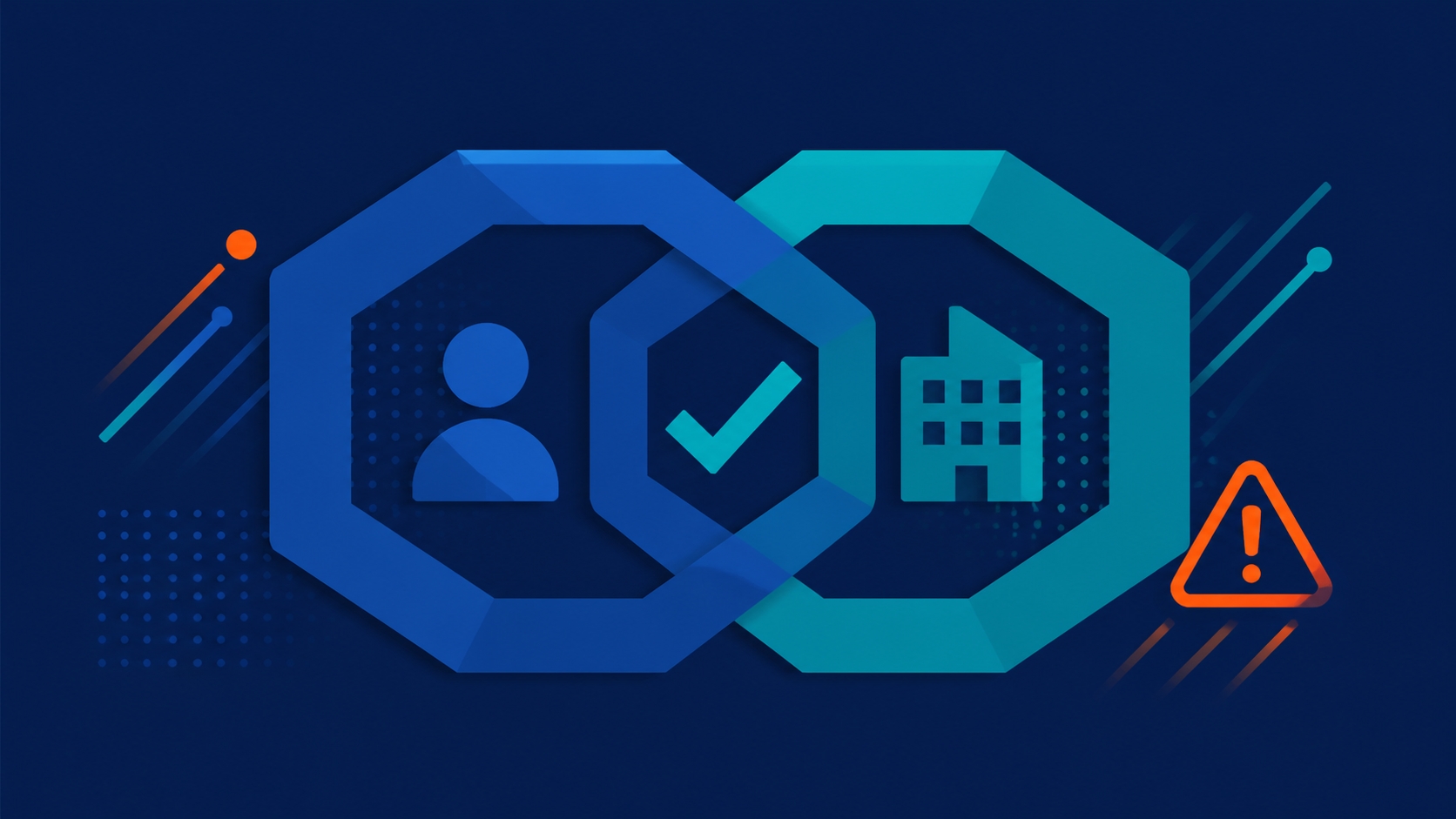
Identity is a chain, not a document. Three links have to hold: the legal entity itself, the people and structures that control it, and the events that change its standing after registration.
Registration is static. It records a moment that has already passed. Ownership is structural, and it reveals who benefits when credit is extended. Legal events are present tense. A lien, a judgment, a lawsuit, or a bankruptcy filing tells you about the counterparty as it exists today, not as it existed at onboarding.
Most credit functions verify the first link and stop. The losses sit in the other two.
What Good Corporate Identity and Legal Events Looks Like
Verify Registration and Standing
The legal name should match Secretary of State records. The entity should be active and in good standing rather than dissolved, suspended, or administratively revoked. Registration dates, jurisdiction, and structure should reconcile across sources.
A dissolved entity still accepting orders is not a data quality problem. It is a decision problem.
Resolve Ownership to the Beneficial Owner
Corporate linkage matters because the entity in front of you is rarely the whole picture. Parent, subsidiary, and affiliate relationships determine who stands behind an obligation and who absorbs a loss.
Where ownership is opaque, that opacity is itself a finding. Legitimate structures can be complex for sound commercial reasons. They can also be complex because complexity is the point.
Monitor Legal Events Continuously
Liens, judgments, suits, bankruptcy filings, and UCC activity are the operating health signal that no static record carries. UCC filings show which lenders hold secured positions, which tells you where you would sit in a queue.
A counterparty that cleared every check at onboarding can acquire a judgment next month. Screening once has never been the same as monitoring.
The Fraud Pattern
Identity stacking. Several entities share the same principals, the same address, and the same formation agent. One carries the trading history, another carries the debt, and a third is formed the week a claim surfaces. Each entity looks acceptable in isolation. The pattern lives in the graph.
History shedding. A name change, a reincorporation in a new state, or a fresh entity formed alongside an older one with a damaged record. The clean record is the new one, and the obligor is the old one.
Judgment parking. Adverse legal events concentrate in a sister entity with no assets, while the operating entity remains pristine. Credit is extended to the clean entity, and recovery runs into a wall that was built in advance.
Structural drift before a request. Ownership changes, new affiliates appear, or a beneficial owner resigns immediately before a large credit application. The sequence is the signal.
The D&B Signal
Identity risk is a connected-data problem. Individual records look clean. The picture only appears when registration history, corporate linkage, and legal events are read together.
Verification confirms the entity exists and matches its own record. Legal events monitoring shows what has happened since. UCC filings reveal secured positions and lender relationships. Corporate linkage maps who controls what. Historical entity tracking shows the changes, when they happened, and in what order.
Order is the part most reviews miss. A name change is unremarkable. A name change three weeks before a limit increase is a question that needs an answer.
The Decision Framework
1. Is the entity who it says it is? Registration matches stated identity, principals verified, beneficial ownership transparent. If ownership cannot be established, treat it as a decline pending verification rather than a data gap.
2. Are there legal events that change the exposure? Liens, judgments, suits, bankruptcies, and secured positions. A judgment is not an automatic decline. An undisclosed judgment is a different matter.
3. Do the identity elements reconcile? Names, addresses, tax identifiers, and registration dates align across sources. When they do not align, the question is why, and the answer determines whether you proceed.
The output of Phase 2 is not a score. It is a verified identity with a current legal position attached, which is the only foundation on which capacity analysis means anything.
Why Ownership Is the Hardest Link
Registration is mechanical and legal events are observable. Ownership is neither. It has to be reasoned about through filings, disclosures, and the shape of the corporate graph.
That is why ownership is where most identity risk survives review. A structure can be entirely lawful and still obscure who receives the benefit of credit and who absorbs the loss. Both facts matter at the point of decision.
The practical test is not whether the structure is simple. It is whether you can name the party you would pursue if the obligation were not met, and whether that party has assets you could reach.
The Timing Question
Any single identity signal can look innocent. A name change, a new affiliate, a leadership departure, a reincorporation in a friendlier jurisdiction. Read alone, each has an ordinary explanation.
Read in sequence against a credit request, the same signals become a story. Which is why historical entity tracking matters more than any single verification check. It supplies the order of events, and order is what separates routine housekeeping from preparation.
The question to ask is never whether a change occurred. It is what the counterparty was doing in the weeks before the change.
D&B Intelligence That Powers Phase 2
D&B solutions that support this phase:
- D&B Business Verification confirms entity legitimacy, registration status, and matches against Secretary of State records
- D&B Legal Events Monitoring delivers real-time alerts on liens, judgments, lawsuits, and bankruptcy filings
- D&B UCC Filings Tracker tracks secured lending activity and collateral positions
- D&B Corporate Linkage maps parent-subsidiary relationships and beneficial ownership structures
- D&B Historical Entity Tracking monitors name changes, mergers, and structural reorganizations
These signals exist outside the balance sheet. They complete the picture of who you are actually partnering with.
The 10-Phase Credit Journey Series
Where we are: Phase 2 of 10
Phase 1: The Compliance Gateway (October 17)
Phase 2: Corporate Identity and Legal Events (October 29)
Phase 3: Operational Assessment (November 3)
Phase 4: Financial Analysis (November 10)
Phase 5: Banking and Capital Structure (November 12)
Phase 6: Trade and Payment Behavior (November 17)
Phase 7: Alternative Data (November 19)
Phase 8: The Entrepreneur Lens (November 24)
Phase 9: Continuous Monitoring (November 26)
Phase 10: The Decision (December 1)
Internal Knowledge + External Insights = Competitive Intelligence
Part of the 10-Phase Credit Checking Framework. Visit b2banalyticinsights.com for the complete series.