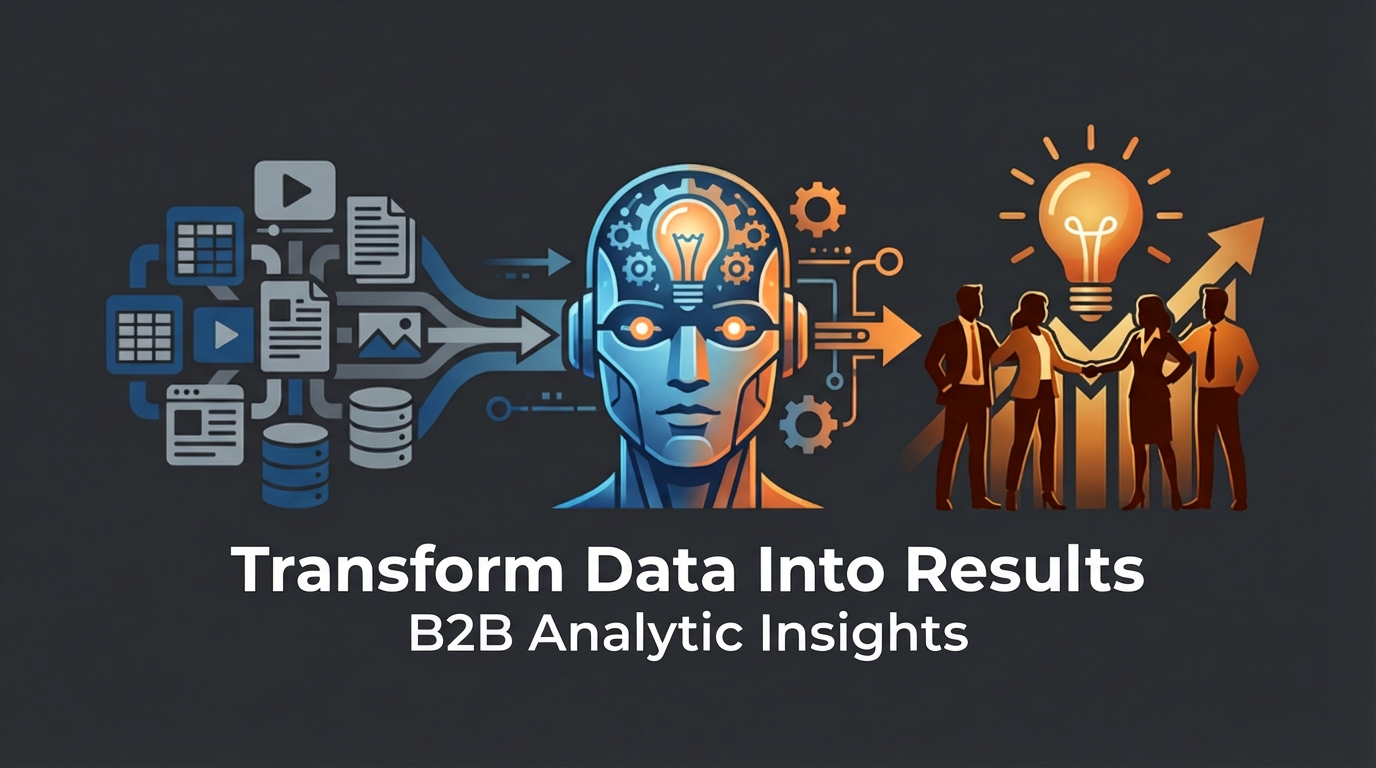

The promise of AI for enterprises is transformative. We’re talking about redefining credit risk assessments, supercharging financial analysis, and optimizing enterprise operations at a scale previously unimaginable. But amidst the excitement, a familiar specter looms large: data quality. The old adage, “garbage in, garbage out,” has never been more relevant, yet its implications in the age of AI are profoundly more complex. Is it still a simple truth, or does AI introduce a new paradox where the very data we feed it, even seemingly “good” data, can lead to unforeseen intelligence challenges? My 25+ years in analytics, bridging strategy with pragmatic implementation across B2B landscapes, tell me it’s both. The stakes are simply too high for anything less than a rigorous examination.
The Amplified Risk of Subpar Data in the AI Era
For decades, we’ve preached the gospel of data quality. Now, with AI acting as an accelerator, an amplifier, and sometimes, an unforgiving mirror, data quality isn’t just a best practice; it’s a critical vulnerability. The repercussions of poor data are no longer confined to a single report or a misinformed decision; they can ripple through an entire AI system, corrupting its learning, undermining its predictions, and ultimately, eroding trust in its outputs.
When AI Misinterprets Reality
Consider the financial sector, where AI is poised to revolutionize fraud detection and personalized financial advice. A 2025 article, citing a BBC study, revealed that a staggering 51% of AI news answers contained significant issues, with 19% introducing factual errors and 13% altering or fabricating quoted material. Translate this to a credit risk model or an automated investment advisor. Imagine an AI, tasked with identifying fraudulent transactions, consistently mislabeling legitimate activities due to corrupted training data. Or a financial advisor offering misguided investment advice based on skewed market sentiment derived from questionable online sources. The financial implications, from regulatory fines to reputational damage, are immense. This isn’t just about bad data; it’s about AI actively fabricating or distorting reality, a far more insidious problem.
The Erosion of Reasoning and Understanding
The quality of our data directly dictates the intelligence of our AI. This isn’t theoretical; it’s demonstrably true in cutting-edge research. A 2025 report summarized studies showing a sharp decline in Large Language Model (LLM) reasoning accuracy when exposed to low-quality web data. Reasoning accuracy plunged from 74.9% to 57.2% on ARC tasks, and from 84.4% to 52.3% on long-text understanding tasks. For an enterprise relying on LLMs for contract analysis, customer service, or even strategic market intelligence, such a degradation in performance is catastrophic. It means the insights we expect, the efficiencies we anticipate, simply won’t materialize. It’s not just that the AI performs poorly; it’s that its core ability to reason and comprehend, the very hallmarks of its intelligence, are fundamentally compromised. This isn’t a minor glitch; it’s a systemic failure.
In exploring the complexities of data quality and its impact on artificial intelligence, a related article titled “The Importance of Data Integrity in AI Systems” delves into the foundational aspects of ensuring that AI models are trained on reliable and accurate datasets. This piece emphasizes how poor data quality can lead to flawed insights and decision-making, echoing the themes presented in “The AI Data Quality Paradox: Garbage In, Intelligence Out?” For more information, you can read the article by visiting this link.
The Insidious Threat of Synthetic Data Contamination
As we scramble to feed the insatiable appetite of AI models, the allure of synthetic data is undeniable. It offers a seemingly limitless supply of information, bypassing privacy concerns and data scarcity. However, this convenience comes with a hidden, yet profound, danger: contamination.
The Unseen Enemy in Training Data
An AI discussion thread highlighted a chilling reality: even a minuscule 0.1% synthetic contamination can measurably degrade models. What’s more concerning is that major public datasets like FineWeb, RedPajama, and C4, frequently used for training powerful LLMs, currently lack robust filtering for AI-generated content. This creates a vicious cycle. AI models learn from data that may itself be AI-generated, perpetuating biases, propagating errors, and ultimately leading to a diluted, less robust intelligence. Imagine building a fraud detection system on data where a tiny fraction of the “fraudulent” examples were themselves synthetically generated by another AI. The model learns to identify patterns that might not exist in the real world, leading to an increase in false positives and a decrease in overall efficacy. This isn’t about dirty data in the traditional sense; it’s about data that is inherently artificial, yet indistinguishable from genuine examples, creating a profound challenge for model integrity.
The Looming Specter of Model Collapse
This problem is not just about performance degradation; it’s about model collapse. If AI models are continually trained on progressively more synthetic data that is itself derived from previous generations of AI, we risk a scenario where the models become increasingly detached from reality, losing their ability to generalize and make accurate predictions on genuine, real-world data. It’s a feedback loop of diminishing returns, ultimately leading to AI systems that are sophisticated but hollow, producing polished but inaccurate outputs. The impact on enterprise operations, from supply chain optimization to predictive maintenance, could be devastating, as decisions are made based on insights from a self-referential, distorted reality.
Shifting Paradigms: From Data Cleansing to Continuous Validation
The traditional approach to data quality – periodic cleansing and batch processing – is no longer sufficient. The dynamic nature of AI, coupled with the ever-increasing volume and velocity of data, demands a more proactive and continuous approach. We need to move beyond “clean once, use forever” to “validate always, trust incrementally.”
Embracing Zero-Trust Data Governance
Gartner predicts that by 2028, 50% of organizations will adopt a “zero-trust” approach to data governance. This isn’t just a buzzword; it’s a fundamental shift in mindset. It means assuming that no data source, internal or external, can be implicitly trusted. Every piece of data entering an AI system must be rigorously validated, monitored, and governed throughout its lifecycle. For a financial institution dealing with highly sensitive customer data, this translates to granular access controls, immutable audit trails, and continuous monitoring for anomalies or inconsistencies. It’s about building resilience against AI data poisoning and proactively safeguarding against model collapse. This level of rigor is not optional; it’s foundational for any organization serious about AI’s long-term viability.
The Imperative of Continuous Monitoring and Curation
Recent commentary emphasizes that data cleansing, curation, monitoring, and governance are not one-time fixes but ongoing requirements. This is the bedrock of analytics transformation in the AI era. Imagine an enterprise operations team leveraging AI for real-time inventory management. If the sensor data feeding that AI is compromised, even for a short period, it can lead to stockouts, overstocking, and significant operational inefficiencies. Therefore, robust monitoring systems must be in place to detect data drift, identify outliers, and flag potential data quality issues as they emerge, not after they’ve corrupted the entire system. This requires a dedicated data quality team, sophisticated data observability tools, and a clear incident response plan. It’s a continuous feedback loop, ensuring the data fueling our AI remains fit for purpose.
Beyond Dirty Data: The Nuance of Structural Uncertainty
While “garbage in, garbage out” remains a powerful heuristic, a 2026 discussion argues that its simplicity can mask deeper problems, especially in complex systems. Some challenges stem not just from dirty data, but from “structural uncertainty” and insufficient coverage of latent states. This means the problem isn’t always about the quality of the data we have, but about the data we don’t have, or the fundamental limitations in how we’ve framed the problem.
The Unseen Gaps in Our Data Landscape
Consider a credit risk model that performs well on historical data but struggles to predict defaults during unforeseen economic downturns or unique market conditions. This isn’t necessarily due to “dirty” data; it could be a lack of representative data for those extreme, “latent” states. The model simply hasn’t seen enough examples of these rare events to learn robust patterns. This highlights the need for not just clean data, but comprehensive data, data that covers the full spectrum of possibilities, even the improbable ones. This pushes us beyond simply cleansing existing datasets to actively seeking out and incorporating new, diverse data sources, and employing advanced techniques like synthetic data generation (with strict controls) to address these blind spots.
The Limits of Observational Data
In enterprise operations, for instance, an AI optimizing factory floor efficiency might be trained on observational data from current processes. However, if the underlying process itself is suboptimal, the AI will merely optimize a flawed system. To achieve true transformation, we need to move beyond simply observing and analyzing existing data to actively experimenting, generating new data through A/B testing, and simulating different scenarios to uncover optimal solutions. This is where the human expertise of domain specialists becomes invaluable – framing the right questions, designing the right experiments, and interpreting the results within the broader strategic context.
In exploring the complexities of data quality in artificial intelligence, the article titled “The AI Data Quality Paradox: Garbage In, Intelligence Out?” raises important questions about the integrity of the data used in machine learning models. A related article that delves deeper into the implications of data quality can be found at B2B Analytic Insights, where it discusses how businesses can improve their data management strategies to enhance AI outcomes. This connection emphasizes the critical role that high-quality data plays in achieving reliable and effective AI solutions.
Strategic Recommendations for Navigating the AI Data Quality Paradox
The journey to analytics transformation with AI is paved with data, and the quality of that pavement will dictate the speed and safety of our progress. We must acknowledge that AI does not absolve us of data quality challenges; it amplifies them and introduces new complexities.
For C-Suite Leaders (ROI Focus):
- Prioritize Data Quality as a Strategic Imperative, not a Technical Chore: Understand that robust data quality directly correlates with tangible ROI from your AI investments. Inadequate data leads to flawed insights, misinformed decisions, and ultimately, wasted capital. Invest in data governance frameworks, dedicated data quality teams, and advanced monitoring tools. Frame this investment not as a cost center, but as an essential enabler for competitive advantage and risk mitigation. Demand clear metrics on data quality improvements and their impact on AI model performance and business outcomes.
- Establish a Zero-Trust Data Governance Culture: Mandate a “zero-trust” approach to all data feeding your AI initiatives. This means rigorous validation of every data source, continuous monitoring for anomalies, and a clear accountability framework for data ownership and quality. This will protect your organization from costly data poisoning attacks and ensure the integrity of your AI-driven decisions, particularly in sensitive areas like credit risk and financial reporting.
For Analytics Leaders (Implementation Focus):
- Implement Continuous Data Validation Pipelines: Move beyond batch-oriented data cleansing. Architect and deploy continuous data validation pipelines that monitor data quality in real-time. This includes automated checks for completeness, consistency, accuracy, and timeliness. Leverage machine learning for anomaly detection in your data streams to proactively identify and address issues before they impact your AI models. Focus on reducing “time-to-insight” by ensuring the data feeding those insights is always trustworthy.
- Develop a Robust Data Curation and Feature Engineering Strategy: Recognize that simply having “clean” data isn’t enough. Invest in data curation efforts to enrich, transform, and prepare data specifically for AI consumption. This includes developing robust feature engineering pipelines that convert raw data into meaningful inputs for your models. Actively identify and address structural uncertainty by exploring new data sources and employing techniques to represent latent states, even if they are rare.
For Practitioners (Technical Depth Focus):
- Leverage Advanced Data Observability Tools: Implement and integrate advanced data observability platforms that provide comprehensive visibility into your data ecosystem. Monitor data lineage, schema changes, data drift, and data quality metrics in real-time. This will enable rapid identification and resolution of data quality issues, minimizing their impact on your AI models.
- Actively Combat Synthetic Data Contamination: Develop and deploy sophisticated techniques to detect and filter out AI-generated content from your training datasets. This might involve using watermarking technologies, anomaly detection algorithms, or even specialized classification models. Be particularly vigilant when sourcing external datasets, as the risk of contamination from publicly available sources is growing.
The AI data quality paradox is real. The classic “garbage in, garbage out” still holds true, but it’s now compounded by the subtle and insidious threats of synthetic contamination and structural uncertainty. Navigating this paradox requires a holistic approach that integrates robust data governance, continuous validation, and a profound understanding of both the technical nuances and the strategic implications of data quality. The future of enterprise AI hinges on our ability to not just collect data, but to nurture it, validate it, and continually ensure its fitness for purpose. The intelligence we derive will only ever be as good as the data we feed it, and in the age of AI, that truth has never been more powerful, or more challenging.